

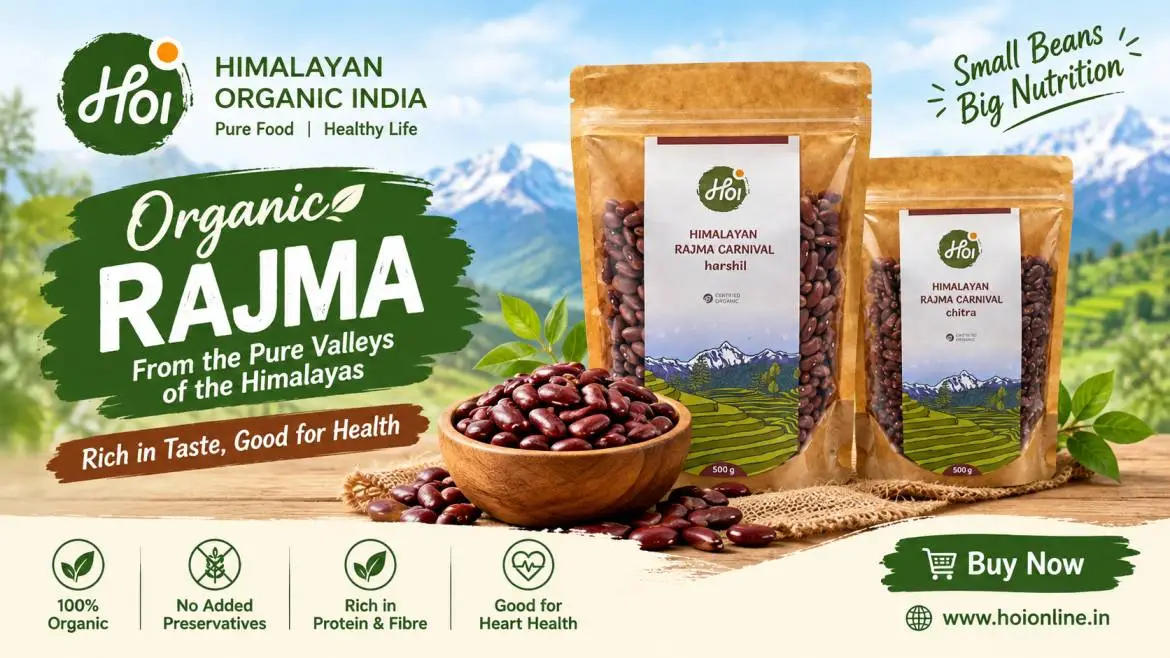
Rajma chawal isn’t just a meal in most Indian households. It’s a comfort food, weekend tradition, and childhood memory rolled into one bowl. But somewhere between mass farming and long supply chains, the Rajma most of us buy today has drifted far from what it used to be.
Organic Rajma is an attempt to bring it back — grown without chemicals, closer to the soil it belongs to, and free of shortcuts taken in the name of speed and yield.
Here’s a complete look at what makes organic Rajma worth choosing, the varieties worth knowing about, and why where it’s grown matters just as much as how it’s cooked.
What Is Organic Rajma?
Organic Rajma (kidney bean) grown without synthetic fertilizers, chemical pesticides, or genetically modified seeds. They are cultivated instead through traditional, sustainable farming methods that work with the land rather than force it.
Regular market Rajma is often grown for yield and shelf life first, with chemical inputs used to speed up the process. Organic Rajma takes the slower route — grown the way it has been for generations, by farmers who prioritize the health of the soil as much as the harvest itself.
Varieties of Organic Rajma Offer By Himalaya Organic India (HOI)
Not all Rajma is the same, and the variety you choose changes both the flavour and the dish it’s best suited for. Himalaya Organic Rajma offers three different types of Rajma. Please check:
Red Rajma (Ramgarh Rajma)
A deep maroon, heirloom variety traditionally grown in the Ramgarh region of Uttarakhand. It has a firm texture, a slightly sweet, earthy flavour, and holds its shape beautifully in thick, slow-cooked gravies — making it the classic choice for authentic Rajma chawal. HOI’s Red Ramgarh Rajma is grown in the mountain soil this variety is known for, staying true to its traditional roots.
Chitra Rajma (White Kidney Beans)
This dal is recognizable by its distinctive maroon-and-white speckled pattern. Chitra Rajma has a softer, creamier texture and cooks faster than its red counterpart. This is making it ideal for lighter dishes and those with more sensitive digestion. HOI’s Organic Chitra Rajma brings this traditional variety to your kitchen in its purest, chemical-free form.
Harshil Rajma (Himalayan Kidney Beans)
Harshil Rajma is grown at high altitude in the Harshil valley near Uttarkashi. This off-white to light-pink variety is prized for its distinctive taste and quicker cooking time compared to regular Rajma. The cold, mountain-grown conditions give it a character that’s hard to replicate at lower altitudes. HOI’s Organic Harshil Rajma brings this rare, high-altitude variety straight from the hills to your kitchen.
All three varieties belong in a well-stocked pantry — the choice often comes down to the dish, the texture you prefer, and sometimes, simply personal taste.
Why Choose Organic Over Regular Rajma?
The difference isn’t just a label — it shows up in the food itself.
- No chemical residue. Organic farming avoids synthetic pesticides and fertilizers, so what reaches your plate is closer to how the bean grew naturally.
- Richer, more authentic flavour. Traditionally grown Rajma tends to have a deeper, more distinct taste compared to intensively farmed varieties bred mainly for volume.
- Better for the soil, season after season. Organic cultivation supports long-term soil health, rather than depleting it for short-term yield.
- A more honest food chain. Choosing organic Rajma means supporting small farmers who grow with care, not large-scale operations optimized purely for output.
Health Benefits of Rajma Dal — By Variety
Rajma has long held a place in Indian kitchens for good reason — it’s a satisfying, protein-rich legume that fits easily into a balanced diet. While all varieties share a similar core nutritional profile, each brings its own subtle strengths to the table.
Red Rajma (Ramgarh Rajma) Health Benefits
Ramgarh Rajma is higher in fibre and antioxidants, with a firmer texture, red Rajma is often favoured for heartier, slow-cooked meals — a satisfying, energy-dense addition to a balanced diet.
Chitra Rajma Health Benefits
It is softer and creamier once cooked. Chitra Rajma tends to be gentler on digestion, making it a comfortable choice for those with more sensitive stomachs or lighter appetites.
Harshil Rajma Health Benefits
Grown in cold, high-altitude conditions, Harshil Rajma is naturally rich in plant protein. It cooks faster than other varieties. This is making it a convenient, nourishing option for everyday meals without long cooking times.
As with any wholesome food, Rajma is best enjoyed as part of a varied, balanced diet — a nourishing addition to your meals, not a substitute for medical guidance.
General Benefits Across All Rajma Varieties
- A good source of plant-based protein and fibre, making meals more filling and satisfying.
- Naturally rich in iron, potassium, magnesium, and folate, nutrients commonly associated with everyday wellness.
- Low in fat, making it a sensible addition to a variety of meal plans.
- Contains antioxidant compounds, which help support the body’s natural defence against oxidative stress.
- A steady, low-glycemic source of energy, thanks to its fibre and carbohydrate balance.
How to Use Organic Rajma in Your Kitchen?
Confused how to use Rajma? Don’t worry, here, we give some ways to use Rajma. Rajma’s versatility goes well beyond the classic Rajma chawal:
Rajma Chawal— the timeless combination, slow-cooked in a rich tomato-onion gravy, served over steamed rice.
Rajma Salad — soaked and boiled Rajma tossed with fresh vegetables, lemon, and spices for a light, protein-packed salad.
Rajma Cutlets — mashed Rajma shaped into patties, pan-fried for a wholesome snack or light meal.
Rajma Soup — blended into a warm, hearty soup, perfect for cooler days.
Fusion Bowls — added to grain bowls or wraps for an easy plant-based protein boost.
Why Buy Rajma Dal from HOI?
Himalaya Organic India is one of the best organic food product stores in Dehradun. Here, you will get a wide range of organic foods like spices, sweeteners, pulses, seeds, and more. HOI works directly with farmers practicing traditional, chemical-free cultivation — which means the Rajma reaching your kitchen is grown the way it was meant to be, not rushed through an industrial supply chain.
Here, we give some points about why choose HOI for purchasing organic products like Rajma. Please check:
- Sourced from trusted, conscious farmers, not mass commercial operations.
- Minimally processed, staying true to the bean’s natural form
- Available in three distinct varieties — Red Ramgarh Rajma, Chitra Rajma, and Harshil Rajma — so you can choose what suits your kitchen.
- Part of a wider range of organic pulses, explore HOI’s full Pulses collection for more traditional, chemical-free staples.
- Backed by HOI’s commitment to honest, conscious food sourcing across everything they offer.
Bring Home Rajma the Way It Was Meant to Be
Good Rajma starts with good farming — and that’s exactly where HOI begins. Grown without chemicals, sourced from conscious farmers, and true to its traditional roots, HOI’s organic Rajma brings real flavour and honest nutrition back to your plate.
Frequently Asked Questions
What is the difference between red Rajma, chitra Rajma, and Harshil Rajma?
Red Rajma has a firmer texture and deeper flavour, ideal for thick gravies. Chitra Rajma is softer, creamier, and cooks faster — better suited for lighter dishes. Harshil Rajma, grown at high altitude, is off-white to light pink, cooks quickly, and has a distinctive taste shaped by its cold-mountain origin.
Is organic Rajma healthier than regular Rajma?
Yes. Organic Rajma is grown without synthetic pesticides or chemical fertilizers, so it’s free from the chemical residue often found in conventionally farmed produce, while retaining its natural nutritional profile.
Which variety of Rajma cooks fastest?
Harshil Rajma and Chitra Rajma generally cook faster than red Rajma. This making them convenient options when you’re short on time, though soaking all varieties in advance helps regardless of type.
How long should Rajma be soaked before cooking?
Ideally, 8–10 hours or overnight. This softens the beans, reduces cooking time, and makes them easier to digest.
How should organic Rajma be stored?
Keep it in an airtight container in a cool, dry place away from direct sunlight and moisture to preserve freshness for months.
Can organic Rajma be used in dishes other than Rajma chawal?
Yes — it works well in salads, cutlets, soups, and grain bowls, making it a versatile addition beyond the traditional curry.