
There’s a reason urad dal shows up in some form in almost every Indian kitchen — as dal makhani on a Sunday, as crisp dosas in the morning, or as soft idlis steamed fresh for breakfast. It’s one of those ingredients so woven into daily life that we rarely stop to ask where it actually comes from, or how different it can be depending on how it’s grown.
Organic black urad dal grown in the Himalayan region of Uttarakhand is a good example of that difference. Smaller, sweeter, and shaped by a mountain agro-ecology found almost nowhere else in the country, it’s a variety worth knowing — not just another bag of dal on the shelf.
What Is Black Urad Dal (Black Gram)?
Black Urad is a pulse widely used across Indian cuisine — from the deep, buttery richness of dal makhani to the fermented batters behind idli and dosa. Whole, it appears as a small black lentil; split and hulled, it turns creamy white, which is the form most commonly used in daily cooking.
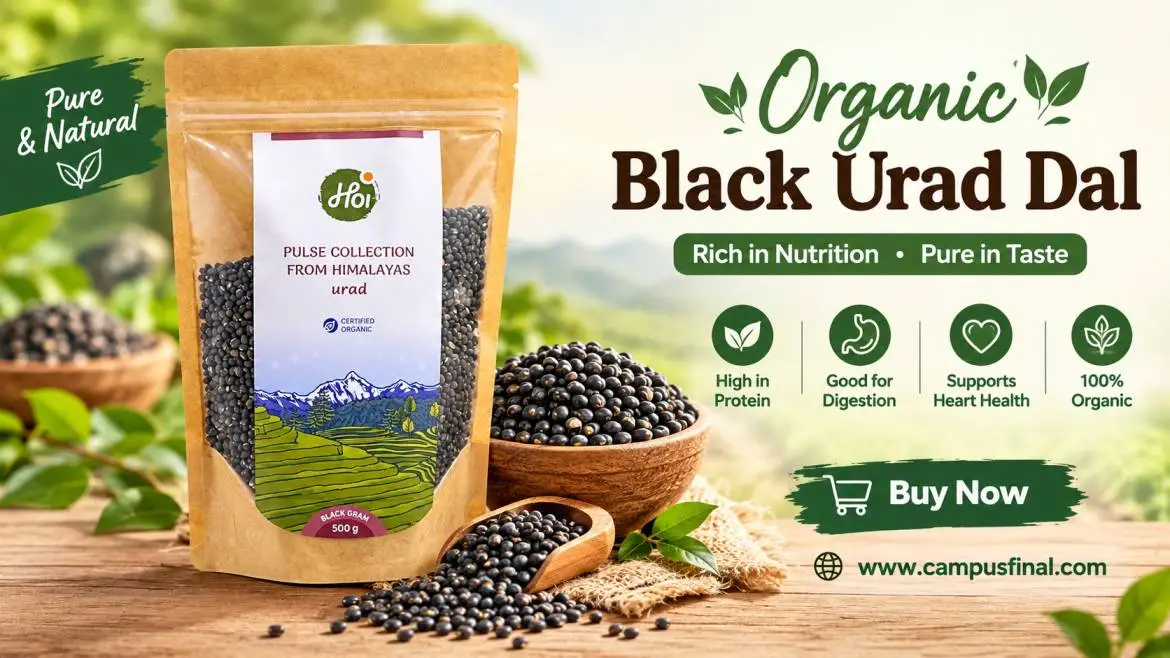
HOI black Urad dal is grown without synthetic fertilizers or chemical pesticides, using traditional farming methods that work with the land rather than push it for faster yields. This matters more than it might seem — the way a pulse is grown directly shapes its flavour, texture, and nutritional quality.
Why HOI Black Urad Dal Is Different?
Not all urad dal is grown the same way, and geography plays a bigger role here than most people realize. The Himalayan region of Uttarakhand has a distinct agro-ecology for pulses. One largely uncommon elsewhere in the country. Pulses grown here, including this local variety of organic urad dal, are endemic to the region and tend to carry a noticeably higher nutritional value, along with superior taste and gastronomical quality compared to pulses grown elsewhere.
This particular Himalayan variety is also smaller in size and naturally sweeter in taste than the urad dal typically found in mainstream markets — a subtle but real difference once you’ve cooked with it.
Nutritional Profile of Himalaya Organic Black Urad Dal
Here’s what organic urad dal (black gram) offers per 100g:
| Nutritional Value (per 100g) | Approx. Amount |
| Energy | 347 kcal |
| Carbohydrates | 58 g |
| Protein | 25 g |
| Fat | 1.6 g |
| Fiber | 9 g |
| Calcium | 138 mg |
| Iron | 7.6 mg |
| Magnesium | 170 mg |
With 22g of protein per 100g and zero cholesterol, this makes black urad dal a genuinely strong plant-based protein source — not just a comfort-food staple.
Everyday Benefits of Organic Black Gram
Choosing organic black urad dal over conventionally grown alternatives comes with a few real, practical advantages:
- Rich source of protein, making it a valuable plant-based option for everyday meals.
- Easily digestible, gentle on the stomach across age groups.
- Rich in fibre, supporting healthy digestion as part of a balanced diet.
- Free from chemical residue, since it’s grown without synthetic pesticides or fertilizers.
- Naturally low in fat, fitting comfortably into a variety of dietary patterns.
As with any wholesome pulse, organic urad dal is best enjoyed as part of a varied, balanced diet— a nourishing addition to your meals, not a substitute for medical advice.
Traditional and Everyday Uses of Black Urad Dal
In the mountains, urad dal holds a place that goes beyond the everyday plate.
Auspicious Occasions — In Himalayan communities, urad is traditionally used during auspicious occasions, often prepared as part of a mixed dal.
Chaisa — Mountain households have long ground urad into powdered form to prepare chaisa, a traditional dish rooted in local culinary heritage.
Everyday Cooking — Beyond tradition, it’s a kitchen staple nationwide:
- Dal Makhani — slow-cooked with butter and cream for a rich, comforting dish.
- Idli and Dosa Batter — fermented with rice to create the base for South India’s most iconic breakfasts.
- Urad Dal Khichdi — combined with rice for a light, easily digestible meal.
- Papad and Vadas — ground into batter for crisp, savoury snacks.
How to Store Organic Urad Dal?
Since organic dal contains no preservatives, proper storage helps it stay fresh longer:
- Store in an airtight container, away from moisture.
- Keep in a cool, dry place, away from direct sunlight.
- Use within the recommended shelf life for best flavour and freshness.
- Check periodically for pests, especially during humid months.
Why Choose HOI’s Organic Black Urad Dal?
Himalaya Organic India (HOI) sources this local Himalayan variety directly from the region it belongs to — grown the traditional way, without chemical shortcuts.
- A genuine local Himalayan variety, smaller in size and naturally sweeter in taste.
- Grown in the region’s unique pulse-friendly agro-ecology, largely uncommon elsewhere in India.
- Minimally processed, staying true to its natural form and nutrition.
- Part of HOI’s wider range of organic pulses, including Organic Navrangi Dal, Himalayan Horse Gram, and Organic Black Bhatt Dal
Explore HOI’s complete range on the Pulses category page to find the right staple for your kitchen.
Bring Home a Pulse Rooted in the Mountains
Good dal starts with good sourcing — and HOI’s organic urad dal carries the taste and tradition of the Himalayan region it comes from, grown the way it always has been, without chemical shortcuts.
Ready to experience the difference? Order HOI’s Organic Urad Dal (Black Gram) today and bring a piece of Himalayan tradition into your kitchen.
Frequently Asked Questions (FAQs)
What is urad dal also known as?
Urad dal is also known as black gram — whole, it’s a small black lentil, and split and hulled, it turns creamy white, which is the form most commonly used in everyday cooking.
Is organic urad dal different from regular urad dal in taste?
Yes, particularly the Himalayan variety — it tends to be smaller in size and naturally sweeter compared to conventionally grown urad dal from other regions.
What is urad dal traditionally used for in the Himalayas?
Beyond everyday cooking, it holds cultural significance, being used during auspicious occasions and traditionally ground into powder to prepare a mountain dish called chaisa.
Is organic black gram a good source of protein?
Yes — with around 22g of protein per 100g, urad dal is a strong plant-based protein source, along with being rich in fibre and low in fat.
How should organic urad dal be stored?
Store it in an airtight container in a cool, dry place away from moisture and direct sunlight to preserve its freshness and flavour.