

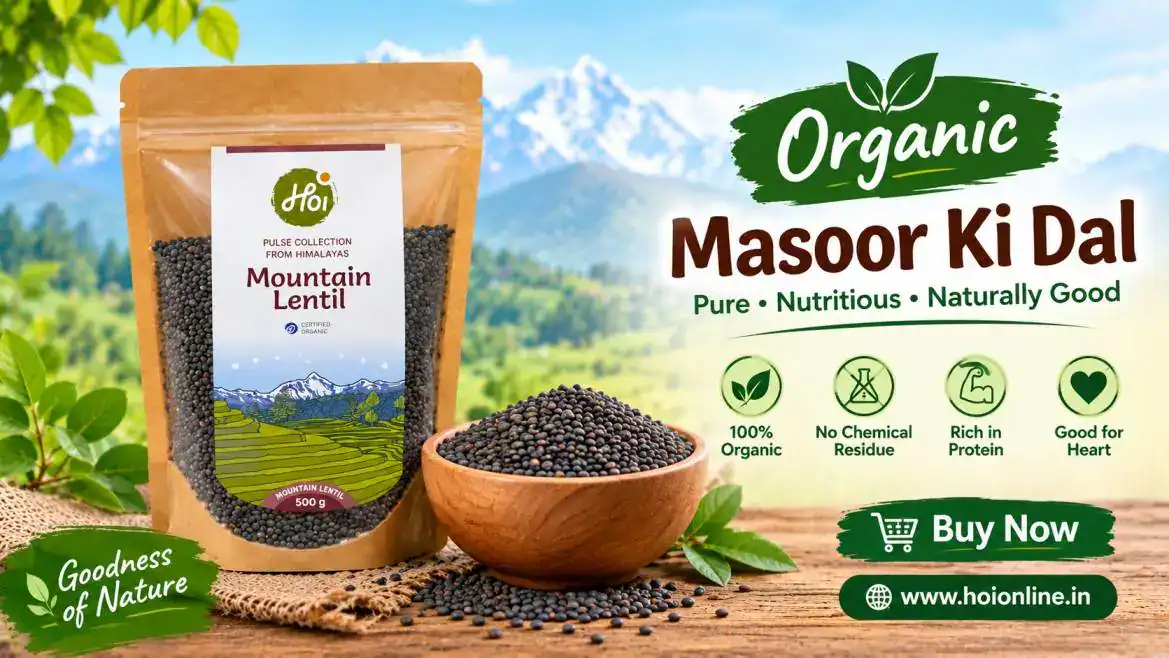
Masoor Ki Dal: A Simple Guide to India’s Favourite Everyday Lentil
Open almost any Indian kitchen cupboard and you’ll find Masoor ki dal sitting there. It’s one of those foods we cook without even thinking — quick, simple, and comforting. But not all Masoor dal is the same, and once you know the difference, you’ll never look at that packet the same way again.
This guide explains everything in simple words — what Masoor dal actually is, why the Himalayan version is special, its benefits, and how to buy the right Masoor ki dal online.
What Is Masoor Ki Dal?
Masoor ki dal is a type of lentil, also called red lentil in English. It’s one of the oldest foods grown by humans — people have been eating this lentil for thousands of years.
Masoor dal comes in two main forms:
Whole Masoor (Sabut Masoor) — small, brown lentils with the outer skin still on. This is the lentil in its natural, complete form.
Split Masoor (Dhuli Masoor) — the same lentil, but with the skin removed and split into two. This is the orange-red dal most people cook daily, and it’s what most households simply call “Masoor dal.”
Both come from the same plant — the difference is just how much processing happens before it reaches your kitchen.
What Makes Himalayan Masoor Dal Different?
Most Masoor dal sold in the market is grown in the plains, using regular farming methods. HOI’ Himalayan Mountain Lentil, however, is grown differently — in the high Himalayan hills, where winters are cold and frost is common. This lentil variety has adapted over generations to survive that harsh mountain weather.
A few things make it special:
- It’s grown using open-pollinated seeds, not hybrid or modified ones.
- HOI’ Masoor dal is farmed using biodynamic practices — a natural, chemical-free way of farming.
- It is not de-hulled, which means the outer skin (or “jacket”) stays on — keeping more of its natural nutrition intact.
- It’s a rabi crop, meaning it grows through winter and can handle frost and snow.
Because it’s grown slowly in this tough mountain climate, it naturally has a heartier texture, deeper flavour, and stronger nutrition compared to regular Masoor dal grown in the plains.
Masoor Dal Nutrition (Per 100g)
Here’s what you get from Himalayan Mountain Lentil, per 100 grams:
| Nutrient | Amount |
| Calories | 116 kcal |
| Fat | 0.4g |
| Carbohydrates | 20 g |
| Fibre | 7.9 g |
| Sugar | 1.8 g |
| Protein | 9 g |
That’s a lot of protein and fibre for very little fat — which is exactly why lentils like this are considered such a smart, everyday food.
Health Benefits of Masoor Dal
Here’s what makes Masoor dal genuinely good for you, explained simply:
- Rich Source of Protein — Great for muscle repair and daily energy, especially useful for vegetarians.
- Easily Digestible — Gentle on the stomach, which makes it suitable for almost everyone, including children and elders.
- Rich in Fibre — Helps keep your digestion smooth and keeps you feeling full for longer.
- Low in Fat — A light, wholesome addition to daily meals without adding unnecessary fat.
- Whole-Grain Goodness — Since the mountain lentil isn’t de-hulled, it keeps more of its natural nutrients compared to fully processed dal.
As with any food, Masoor dal works best as part of a balanced diet — it’s a healthy addition to your meals, not a cure or treatment for any health condition.
How to Use Masoor Dal in Everyday Cooking?
Masoor dal is one of the easiest lentils to cook with. A few simple ways to use it:
As Regular Dal — Soak overnight, then cook with turmeric, salt, and a simple tadka. Ready in no time.
As a Soup — Cook and blend lightly with vegetables for a warm, light soup.
As Sprouts for Salad — Soak and sprout the lentils, then toss with lemon, onions, and spices for a fresh, protein-rich salad.
As a Filler — Mash cooked lentils and use them in patties, parathas, or cutlets for extra protein and flavour.
Because this is a whole, unprocessed lentil, it’s best to soak it overnight before cooking — this softens it and reduces cooking time significantly.
Masoor Dal Online: What to Check Before You Buy
With so many options available for Masoor dal online, here’s a simple checklist to pick a good one:
- Whole or split? Make sure the listing clearly says which type you’re buying — they cook and taste differently.
- Is it organic? Look for real certification, not just the word “organic” on the label.
- Where is it grown? Himalayan-grown Masoor dal tends to have better texture and flavour than mass-farmed varieties.
- Check the nutrition label. A genuine, minimally processed dal will show real values like the ones listed above — not vague claims.
- Check the packaging date. Freshly packed dal cooks better and tastes better than old stock sitting in a warehouse.
How to Store Masoor Dal?
If you want your Masoor ki dal remain store for many months in good quality then you must know how to store.
- Keep it in an airtight container.
- Store in a cool, dry place, away from sunlight.
- Use within the best-before period mentioned on the pack.
- Check occasionally for pests, especially in humid weather.
Why Choose HOI’s Himalayan Masoor Dal?
Himalaya Organic India (HOI) brings this traditional mountain lentil straight from Himalayan hill farmers to your kitchen.
- Grown the traditional way — using open-pollinated seeds and biodynamic farming.
- Not de-hulled, so you get the whole grain with all its natural goodness.
- Certified organic, so you know exactly what you’re getting.
- Part of HOI’s wider pulses range, including Organic Urad Dal (Black Gram) and Himalayan Horse Gram (Gahat Dal).
Explore more on the Pulses category page.
Bring Home a Lentil Grown the Traditional Way
Good dal starts with good sourcing — and HOI’s Himalayan Mountain Lentil brings you Masoor dal the way it’s meant to be: whole, natural, and grown with care in the hills.
Ready to try it? Order HOI’s Himalayan Mountain Lentil (Masoor ki Dal) today and taste the real difference mountain farming makes.
Frequently Asked Questions
What is Masoor ki dal called in English?
Masoor ki dal is called red lentil in English, though the whole, unhulled version is often referred to simply as lentil or mountain lentil.
Is whole Masoor dal different from regular Masoor dal?
Yes. Whole Masoor (sabut Masoor) has its skin intact, while regular split Masoor (dhuli Masoor) has the skin removed and is split into two. They look and cook differently.
Do I need to soak Masoor dal before cooking?
Whole Masoor dal cooks better after soaking overnight, as it softens the lentil and shortens cooking time. Split Masoor dal cooks quickly even without soaking.
Is Himalayan Masoor dal healthier than regular Masoor dal?
Since it isn’t de-hulled and is grown using natural, chemical-free methods, Himalayan Masoor dal retains more of its natural nutrition compared to heavily processed varieties.
How should I store Masoor dal at home?
Store it in an airtight container in a cool, dry place, away from direct sunlight, and use it within the recommended shelf life for the best taste and freshness.