

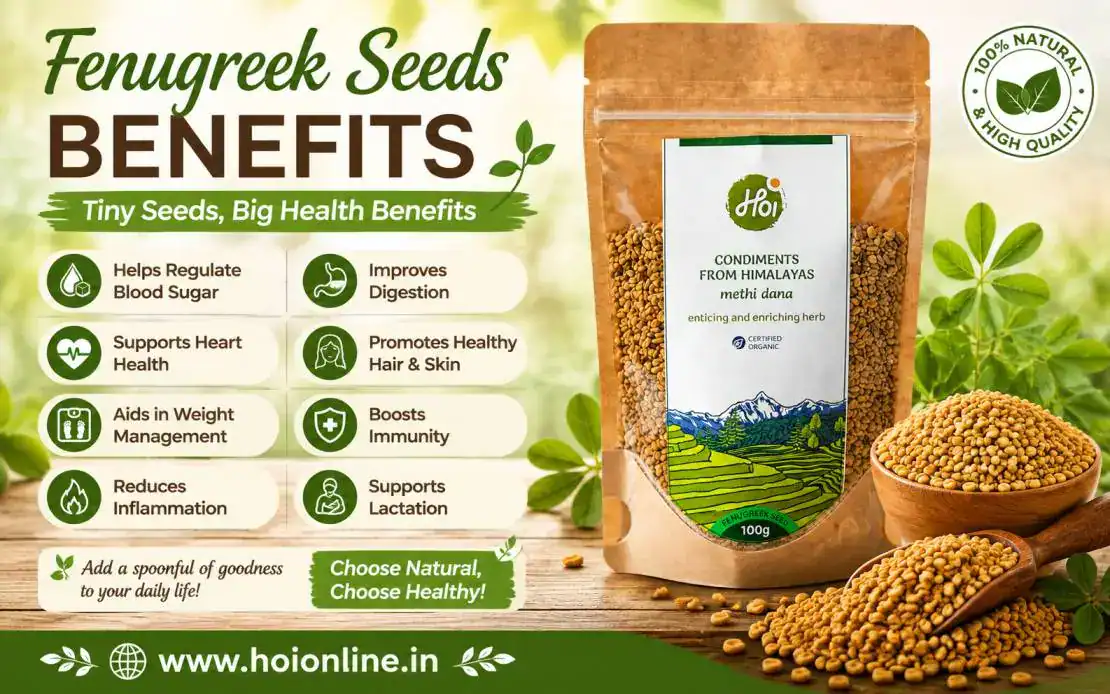
Fenugreek Seeds Benefits: Nutrition and Uses
Fenugreek seeds, commonly known as Methi Dana. They are small golden-brown seeds widely used in Indian cooking and traditional food practices. They have a distinct aroma, slightly bitter taste, and warming character.
Today, fenugreek seeds are valued not only as a kitchen spice but also as a naturally nutritious food ingredient. They contain dietary fibre, protein, minerals, and plant compounds, making them an interesting addition to a balanced diet.
In this guide, we will explore the major fenugreek seeds benefits. Benefits like nutritional value, common uses, and simple ways to include them in everyday meals.
What Are Fenugreek Seeds?
Fenugreek seeds come from the fenugreek plant, scientifically known as Trigonella foenum-graecum. In India, the seeds are popularly called Methi Dana.
The seeds are small, hard, and yellowish-brown. They have a naturally bitter taste that becomes more pleasant when roasted or cooked.
It is used in many Indian recipes, including pickles, curries, spice blends, vegetables, and traditional preparations.
Fenugreek Seeds Benefits at a Glance
Fenugreek seeds can be a useful addition to a balanced diet because they provide:
- Dietary fibre
- Plant-based protein
- Iron and other minerals
- Naturally occurring plant compounds
- A distinctive flavour for Indian dishes
- Versatile options for cooking and food preparation
Their nutritional value makes fenugreek seeds benefits worth exploring as part of an overall healthy eating pattern.
Supports Digestive Health
Fenugreek seeds are naturally rich in dietary fibre. Fibre plays an important role in maintaining normal digestive function. Including fibre-rich foods in your diet can support regular bowel movements and overall gut health. These seeds are therefore commonly used in traditional Indian food preparations for their digestive qualities.
May Support Healthy Blood Sugar Management
One of the most researched potential fenugreek seeds benefits is their relationship with blood sugar management. Fenugreek seeds contain soluble fibre and plant compounds. It may influence carbohydrate digestion and glucose absorption. However, fenugreek should not be considered a treatment for diabetes. People taking diabetes medicines should speak with their healthcare professional before using concentrated amounts of fenugreek.
A Good Source of Dietary Fibre
Fibre is an important part of a healthy diet. It helps add bulk to food and supports normal digestion. Fenugreek seeds can contribute fibre to meals when consumed as part of a varied diet.
This is one reason why adding small amounts of methi dana to traditional recipes can be a simple way to increase the nutritional variety of your meals.
Provides Plant-Based Protein
Fenugreek seeds contain plant-based protein along with other nutrients. Protein is essential for many functions in the body, including the maintenance of muscles and tissues.
Although fenugreek is normally consumed in small quantities, it can still contribute to overall nutrient intake when combined with pulses, grains, vegetables, nuts, and seeds.
Contains Important Minerals
Fenugreek seeds naturally provide several minerals, including iron, calcium, and potassium. These nutrients have different roles in the body. For example, iron contributes to normal oxygen transport, calcium is important for bones and teeth, and potassium supports normal muscle and nerve function.
Contains Natural Plant Compounds
Fenugreek seeds contain naturally occurring compounds such as saponins, flavonoids, and other polyphenolic compounds. These substances are being studied for their potential health-related properties.
May Support Heart-Friendly Eating
It contains fibre and various plant compounds that make them an interesting ingredient for a balanced diet. A heart-friendly lifestyle should focus on an overall eating pattern that includes vegetables, fruits, whole grains, pulses, nuts, seeds, and appropriate sources of protein. Fenugreek can complement this type of diet but should not be viewed as a standalone solution for heart health.
Useful for Traditional Indian Cooking
Fenugreek seeds have an important place in Indian cuisine. They are often added to:
- Pickles
- Vegetable dishes
- Dal
- Curries
- Spice blends
- Homemade masalas
- Traditional drinks and preparations
Even a small quantity can add a strong aroma and distinctive flavour to food.
Fenugreek Seeds Nutrition
Fenugreek seeds are a concentrated food, so they are generally used in small quantities.
| Nutritional Value (per 100 g) | Approx. Amount |
| Energy | 323 kcal |
| Carbohydrates | 58 g |
| Protein | 23 g |
| Fat | 6.4 g |
| Fiber | 25 g |
| Iron | 33.5 mg |
| Calcium | 176 mg |
Nutritional values can vary depending on the variety, cultivation, processing, storage, and testing method. Always refer to the product’s current packaging for the applicable nutrition information.
How to Use Fenugreek Seeds?
There are several easy ways to use Methi Dana in everyday cooking.
Add to Curries and Dal
A small amount of fenugreek seeds can be tempered in oil or ghee along with other spices. They add a warm aroma and slightly bitter flavour to dal, vegetables, and curries.
Use in Pickles
Fenugreek seeds are commonly used in Indian pickle recipes. They work particularly well with mustard seeds, fennel, chilli, turmeric, and other traditional spices.
Roast Before Using
Lightly roasting fenugreek seeds can change their aroma and flavour. Roast them gently and avoid burning them, as excessive roasting can make their natural bitterness stronger.
Make Fenugreek Powder
Fenugreek seeds can be dry-roasted and ground into a powder. The powder can be used in homemade spice mixes, curries, pickles, and other recipes.
Fenugreek Seeds vs Fenugreek Leaves
Fenugreek seeds and fenugreek leaves come from the same plant, but they are different ingredients. Fenugreek seeds, or methi dana, are small, hard, and slightly bitter. They are mainly used as a spice.
Fenugreek leaves, commonly called methi, are leafy greens used as a vegetable or herb. Both have their own culinary uses and nutritional characteristics.
How Much Fenugreek Seed Should You Eat?
There is no single ideal amount for everyone. Fenugreek seeds have a strong flavour and are usually consumed in relatively small quantities as part of meals.
If you are considering taking fenugreek in larger amounts or as a supplement, especially if you are pregnant, breastfeeding, taking medication, or managing a health condition, consult a qualified healthcare professional first.
Are Fenugreek Seeds Good for Everyone?
Fenugreek is commonly used as a food ingredient, but more is not always better. Large amounts may cause digestive discomfort in some people. Fenugreek can also interact with certain medicines, particularly medicines that affect blood sugar or blood clotting.
Anyone with a medical condition or taking regular medication should seek professional advice before using concentrated fenugreek preparations.
How to Choose Good Quality Fenugreek Seeds?
When buying fenugreek seeds online, look for a product that is:
- Clean and properly packed
- Free from visible impurities
- Fresh and aromatic
- Clearly labelled
- Stored in suitable packaging
- Supported by transparent product information
For everyday cooking, quality and freshness are important because old or poorly stored seeds can lose their characteristic aroma. If you want fresh and organic methi dana then visit Himalaya Organic India (HOI). We offer the best quality organic food products at best price to your door step with free delivery.
Why Choose Organic Methi Dana?
Organic fenugreek seeds are produced under organic farming standards designed to reduce reliance on certain synthetic agricultural inputs.
For consumers who prefer organic food, choosing organic Methi Dana can be a convenient way to bring organically produced ingredients into everyday cooking.
It is still important to check the product packaging and applicable organic certification or standards when making a purchase.
Organic Fenugreek Seeds from Himalaya Organic India
We offer food products focused on naturally sourced ingredients for everyday use. For customers looking for organic fenugreek seeds online, choosing a properly labelled and carefully packed product can make every day cooking more convenient.
Easy Ways to Add Methi Dana to Your Diet
You do not need complicated recipes to enjoy fenugreek seeds. Try these simple ideas:
- Add a small amount to dal while tempering.
- Use roasted fenugreek in homemade spice powder.
- Add it to traditional pickle recipes.
- Mix a small quantity into vegetable curries.
- Use it as one ingredient in homemade masala blends.
Because of its strong flavour, a little fenugreek can go a long way.
Final Thoughts
These seeds are a traditional Indian ingredient with an impressive nutritional profile. Their fibre, plant-based protein, minerals, and natural plant compounds make them a valuable addition to a varied and balanced diet.
You can use these tiny seeds in dal, curries, pickles and spice blends. There are many simple ways to use Methi Dana in everyday meals.
If you are looking for organic fenugreek seeds, Contact us. Explore quality organic food products from Himalaya Organic India and bring the goodness of traditional ingredients into your everyday kitchen.
Frequently Asked Questions
What are fenugreek seeds called in Hindi?
Fenugreek seeds are called Methi Dana (मेथी दाना) in Hindi.
What are the main fenugreek seeds benefits?
Fenugreek seeds provide dietary fibre, plant-based protein, and several minerals. They are also rich in naturally occurring plant compounds and are traditionally used in Indian cooking.
Can fenugreek seeds support digestion?
Fenugreek seeds contain dietary fibre, which can contribute to normal digestive health when included as part of a balanced diet.
Can I eat fenugreek seeds every day?
Fenugreek can be used regularly as a food ingredient in suitable quantities. If you plan to consume large amounts or use fenugreek supplements, consult a healthcare professional, particularly if you take medication.
How should fenugreek seeds be stored?
Store it in a cool, dry place away from moisture and direct sunlight. Keep the package properly closed after use.
Can I buy organic fenugreek seeds online?
Yes. Consumers can purchase organic fenugreek seeds online from suitable organic food retailers. HOI offers best quality fenugreek seeds online.